John 21 part 2: Evangelism and the Messianic Banquet
On Tuesday, I posted some thoughts on why John records the miraculous catch of fish in John 21.
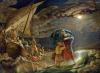
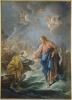
This Sunday I'm preaching on John 21:1-14, the miraculous catch of fish. I've been asking myself why this miracle is recorded in John's gospel. Here are some thoughts.
Here's why the question needs asking. The story is a miracle (the catch of fish), and a post-resurrection appearance (“Afterwards Jesus appeared again to his disciples. … This was now the third time Jesus appeared to his disciples after he was raised from the dead”).
Christians need breadth as well as depth as we read the Bible. As we enter a new year, why not resolve to start the habit of reading right through the Bible - not just once this year, but as part of a routine that will feed and sustain you for the rest of your life. Here are 3 tools to help you do so, and a copy of the Bible reading plan I use personally.
As we look at the visit of the Magi in Matthew 2, the obvious lead human characters in the story are Herod, the Magi, and Jesus himself. These are the lead protagonists and antagonists.
Whilst the Jewish priests are more flat, functionary characters, we mustn't miss the contrast Matthew deliberately paints between them and the Magi.
In 1960, C S Lewis published a book entitled The Four Loves (paid link). It has become a classic. He explains that there are four different Greek words for our English word "love", and they have different meanings. There is the bond of love within a family, the love of friendship, erotic love, and charity.
I was recently asked a great question that made me go away and think awhile.
The question is a simple one: Jesus tells us to love our enemies. The devil is our enemy. So does this mean we should love the devil?
Here's the answer I gave:
That’s a great question. Certainly the devil is called “our enemy” in 1 Peter 5:8.
Let me give several answers, starting with the simplest, getting progressively more involved.
Last week, I wrote a post quoting Calvin's interpretation of Peter walking on the water in Matthew 14:22-33. I was looking again at this passage, as the lectionary brought it round again, having last preached on it in 2018.
I most recently preached on Matthew 14:24-33 (the story of Jesus walking on the water) in January 2018.
"Of making many books there is no end" (Ecclesiastes 12:12)
If that was true when Ecclesiastes was written, how much more true is it in the days of social media. Surely the writer of Ecclesiastes would comment: "Of the writing of opinions on social media, there is no end"!
This fifth talk draws the threads together, and asks how an orthodox understanding of the Trinity is good news for us. We look at how God's power, God's love, and God being knowable all hinge on God being Triune.
Recent comments