The divided people of God in 1 Kings 12

More from Peter Leithart (paid link) on 1 and 2 Kings, this time his comment on the torn and divided kingdom as recorded in 1 Kings 12. This is rich. Enjoy.
Blog Category:
More from Peter Leithart (paid link) on 1 and 2 Kings, this time his comment on the torn and divided kingdom as recorded in 1 Kings 12. This is rich. Enjoy.

I’m enjoying reading Peter Leithart’s stimulating commentary (paid link) on 1 and 2 Kings.
He makes the point that, superficially, the book of Kings could reinforce Marcionite assumptions that the God of the Old Testament is harsh and vindictive, while we only meet his love and mercy in the New Testament.

Zedekiah, king of Judah (597-587 B.C.) consistently expected that God would bring a last minute reprieve, and he and his people would not be conquered by the Babylonians. He underestimated the sin of his people, and he underestimated God's power to deal with that.
For this reason, the prophet Jeremiah consistently has to warn him that there will be no reprieve. Into exile they will go.

A thought on why Ezekiel 40-48 are such important chapters.
The other day I was reading 2 Chronicles 6:36-39, the prayer that Solomon prays when he dedicates the new temple he's just built. If the people are exiled, they can pray towards the city and the temple and God will hear.
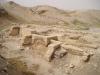
On Sunday at church, we looked briefly at Joshua 6, the fall of Jericho.
I say briefly. This was an all-age service, and we're running through a Bible overview at these monthly services. So my rule of thumb is that the talk should be followable by someone aged about 7, whilst having application and food for thought for those of any age. That means one main point, and the talk has to be brief.

I'll just park this here for future reference.
Sometimes you see writers say that certain parts of the Bible are written in the "apocalyptic" style of writing.
Recognising the "genre" of part of the Bible can be very important when it comes to reading it properly. For instance, parables and historical narrative communicate in very different ways; you'd completely misread the gospels if you confused them.
When you have something you do not want to forget, do you write it on your hand? Some people write things on the palms of their hands; others write things on the back; others don't do this at all.
I owe to my friend John Goulding the following observation:
In Jonah 4, God provided a plant to shield Jonah from the heat. The verb "to provide" is a key-word in Jonah - it's
Oh, the pain of leaving things out.
I'm preaching on 1 Kings 11-12 on Sunday. As is always the case with preaching, the aim is to help people to hear what that part of Scripture is saying to us today. And in order to be clear, you have to be ruthless. So often, there are all kinds of really interesting things you've learnt and discovered in the text, and they have to go on the proverbial cutting-room floor.
I'm preaching on 1 Kings 2 this Sunday, and it's a trickier passage than it first looks.
David had previously overlooked two murders committed by his commander in chief, Joab, and pardoned the insolent Shimei.
Then the time comes to hand over the kingdom to Solomon. (So thank you to King Juan of Spain for choosing this week...). He urges Solomon to bring justice to these two.
So here's the question: Why did David change his mind?

Recent comments