Follow that star tonight, Bethlehem
Doug Wilson's post on the star followed by the wise men is most thought-provoking and insightful.
Enjoy!
Doug Wilson's post on the star followed by the wise men is most thought-provoking and insightful.
Enjoy!
Just spotted this for the first time: Luke 17:6-10 and Luke 17:11-19 are deliberately juxtaposed.
17:6-10 establishes that the right way to relate to God is as his servants. When we serve him, he doesn't “thank” us, because we recognise that we are merely giving him (a tiny part of) what he is due. As the commentaries point out, this is really about the fact that God does not owe us anything because of the service we have given him. Our service never puts us in his debt.
Brilliant

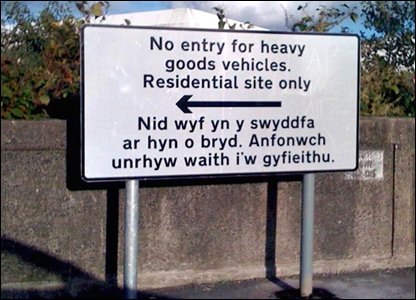
The BBC reported on Friday about a sign outside a supermarket in Morriston, Swansea. The English sign read "No entry for heavy goods vehicles. Residential site only". They e-mailed their road sign to Swansea Council's translation department, so that they could also put up the Welsh equivalent. They received their reply, and duly put the sign up in both languages. Apparently "Nid wyf yn y swyddfa ar hyn o bryd. Anfonwch unrhyw waith iw gyfieithu" means "I am not in the office at the moment. Please send any work to be translated."
Now everything is formally announced, I can post this on here.
Last week, I was contacted by a new micro-roaster, Coffee Bean Shop, asking if I'd be interested in a free sample of some of their beans to try. I didn't have to think long about gift-horses before deciding that wouldn't be a bad idea.
I picked up a second-hand copy of G B Caird's Penguin Commentary on Luke from 1963. Second-hand is all you'll get, but if you spot one in a second-hand bookshop, I'd say: Buy it!
Short. Insightful. Refreshing. Helpful.
I keep finding things written by Christopher Idle at the moment. It's purely co-incidence: Looking for something unrelated and stumble upon it. First some comments on the poem Death is Nothing at all, and now this.
Idle wrote a short article in New Directions magazine. I'm not particularly wanting to endorse or plug the publication – I've never seen a copy – I stumbled upon his article online.
What is an Evangelical? is a short article (so, reader, click through and read!) whose title partly defines what he's writing about. He's actually not seeking to define us evangelicals historically, doctrinally or in any other sense of what we should be. Rather he offers “a snapshot of what today's evangelical looks like. Or rather, a brief slice of fuzzy film where we have been caught on CCTV for a few minutes one Sunday.” And, yes, Idle and I are both evangelicals. This is a slightly satirical depiction from within.
How do we pray the Psalms as new covenant Christians? What difference does it make that they have been prayed before — now not just by king David but by king Jesus?
Is there any mileage in seeing the Lord's Prayer as a key part of this answer?
Those who were in my A-level maths class at school had the pleasure of being taught by a delightful teacher, who pretended not to didn't know what was on the syllabus. We were taught maths, and at some point he had a quick peak at the syllabus to check we were ready for the exams.
How heart-warming to read the BBC News headline: Too much maths 'taught to test'.
Having used it a little, Robert Alter's The Book of Psalms: A Translation with Commentary looks to be a highly worthwhile book to have.
Robert Alter has done lots of work over the years on understanding how Hebrew poetry works. Here, he offers his own translation of the Psalms, together with a short commentary on the text. The comments are brief, but insightful. The translation is fresh, and where he differs significantly from most English versions he explains why he translates as he does.
Let me give an example, from Psalm 1:2
Translation:
But the LORD's teaching is his desire, and His teaching he murmurs day and night
Comment:
2. murmurs. The verb hagah means to make a low muttering sound, which is what one does with a text in a culture where there is no silent reading. By extension, predominantly in post-biblical Hebrew, it has the sense of “to meditate.”
Recent comments