The divided people of God in 1 Kings 12

More from Peter Leithart (paid link) on 1 and 2 Kings, this time his comment on the torn and divided kingdom as recorded in 1 Kings 12. This is rich. Enjoy.
Blog Category:
More from Peter Leithart (paid link) on 1 and 2 Kings, this time his comment on the torn and divided kingdom as recorded in 1 Kings 12. This is rich. Enjoy.

I’m enjoying reading Peter Leithart’s stimulating commentary (paid link) on 1 and 2 Kings.
He makes the point that, superficially, the book of Kings could reinforce Marcionite assumptions that the God of the Old Testament is harsh and vindictive, while we only meet his love and mercy in the New Testament.
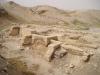
On Sunday at church, we looked briefly at Joshua 6, the fall of Jericho.
I say briefly. This was an all-age service, and we're running through a Bible overview at these monthly services. So my rule of thumb is that the talk should be followable by someone aged about 7, whilst having application and food for thought for those of any age. That means one main point, and the talk has to be brief.
Oh, the pain of leaving things out.
I'm preaching on 1 Kings 11-12 on Sunday. As is always the case with preaching, the aim is to help people to hear what that part of Scripture is saying to us today. And in order to be clear, you have to be ruthless. So often, there are all kinds of really interesting things you've learnt and discovered in the text, and they have to go on the proverbial cutting-room floor.
I'm preaching on 1 Kings 2 this Sunday, and it's a trickier passage than it first looks.
David had previously overlooked two murders committed by his commander in chief, Joab, and pardoned the insolent Shimei.
Then the time comes to hand over the kingdom to Solomon. (So thank you to King Juan of Spain for choosing this week...). He urges Solomon to bring justice to these two.
So here's the question: Why did David change his mind?
I've never noticed this before. Sometimes, you notice something in the Bible, it's then so obvious that you wonder why you didn't see it there before. That's a good sign that it's on the right track - it's noticing what's there, rather than reading in things that are not there. It also means it's highly likely that lots of other people have seen it before, and that I'm just playing catch-up - so there are no claims to originality here.
The opening of the book of Samuel anchors the book firmly in its context, as a book following on from Judges.
I think this post from Steve Jeffery is very helpful
2 Samuel 6 describes what King David did when the Ark of the LORD was brought into the city of Jerusalem.
Alec Motyer wrote this very helpful paragraph in his commentary on Exodus (paid link).
I think this has struck me before. Re-reading 1 Samuel, we find that:
Why does Jesus spend forty days in the wilderness, confronting public enemy number 1 (Satan, the accuser of the people of God), immediately after he has been declared Son of God (echoing Psalm 2) at his baptism?
I know that one answer is that it relates to the 40 years Israel spent in the wilderness. Jesus must be faithful at the exact point at which they failed.
Recent comments