Thyatira: A Church Living in Love and Faith
Background
In February 2017, General Synod refused to take note of a report by the House of Bishops on human sexuality. I wrote on this at the time: It really is time to choose.
Blog Category:
In February 2017, General Synod refused to take note of a report by the House of Bishops on human sexuality. I wrote on this at the time: It really is time to choose.
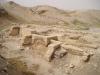
On Sunday at church, we looked briefly at Joshua 6, the fall of Jericho.
I say briefly. This was an all-age service, and we're running through a Bible overview at these monthly services. So my rule of thumb is that the talk should be followable by someone aged about 7, whilst having application and food for thought for those of any age. That means one main point, and the talk has to be brief.

Children's Bibles are great. They retell key stories from the Bible in a way that children can readily follow. Each one has its own editorial policy, aiming for a particular reading age and style, with consistent illustrations.
But they're a minefield. When you try to summarise to remove extraneous details, it's easy accidentally to remove the most important thing. Like Jesus forgiving the sins of the paralysed man in Matthew 9:1-8.
When you have extra details that need a little explanation, it's easy to do so in a way that removes the most important tensions of the narrative. Like this example ...:
Several years back I wrote about a discovery that the carol, While Shepherds Watched not only fits to the tune of On Ilkley Moor Baht 'at, the Yorkshire folk tune, but that may even have been the original tune.
It's been a joy, and at times a challenge, to preach right through the letter of 1 Corinthians. It's healthy to take a long epistle like this, and to tackle it in a single sermon series, so we don't lose the train of Paul's thought by interrupting the series midway through. The challenge, then, is to decide how fast to go. Too fast, and you get such long blocks that the details get lost and the series is bland. Too slow, and the series simply takes too long, and we actually do lose Paul's train of thought because it's so long since we began.
Notes from a sermon preached on 20th May 2018 (Pentecost Sunday 2018), based on John 16:12-15.

Paul Barnett has written (paid link) a very helpful, carefully applied, commentary (paid link) on 1 Corinthians.

Matthew and Mark both record two feeding miracles. In Matthew 14:13-21 we have the feeding of the 5000; in Matthew 15:21-29 we have the feeding of the 4000.




Recent comments